
Pde Courses
Pde Courses - Up to 10% cash back this course introduces you to pde, explains the difference between homogeneous and non homogeneous equations and how to solve each of them. And stability, consistency, convergence, and lax's equivalence theorem. The goal of this course is to teach the basics of partial differential equations (pde), linear and nonlinear. Gain insights into their properties, applications, and mathematical foundations in engineering and physics. This course provides students with the basic analytical and computational tools of linear partial differential equations (pdes) for practical applications in science engineering, including heat /. It begins by providing a list of the most important pde and. All of our professional development offerings provide the opportunity for participants to collaborate and network to improve their practice. In this course, we will discuss some important physical systems and the pdes that are commonly used to model them. Students must complete the ets praxis school leaders licensure assessment (slla) (#6990) to qualify for certification. This course presents practical methods for solving partial differential equations (pdes). Up to 10% cash back gain a thorough understanding of the fourier transform and its application to solving pde's. All of our professional development offerings provide the opportunity for participants to collaborate and network to improve their practice. Up to 10% cash back this course introduces you to pde, explains the difference between homogeneous and non homogeneous equations and how to solve each of them. And stability, consistency, convergence, and lax's equivalence theorem. The course is an introduction to partial differential equations, problems associated to them and methods of their analysis. The course covers solutions of hyperbolic, parabolic, and elliptic equations in two or more. It begins by providing a list of the most important pde and. This syllabus section provides the course description and information on meeting times, prerequisites, required text, homework assignments, exams, and grading. The goal of this course is to teach the basics of partial differential equations (pde), linear and nonlinear. This course presents practical methods for solving partial differential equations (pdes). The course is an introduction to partial differential equations, problems associated to them and methods of their analysis. Wave, heat, and laplace's equations. It begins by providing a list of the most important pde and. The first part of this course introduces basic properties of pde's; We offer a variety of professional learning opportunities through workshops and courses. Students must complete the ets praxis school leaders licensure assessment (slla) (#6990) to qualify for certification. The course is an introduction to partial differential equations, problems associated to them and methods of their analysis. And stability, consistency, convergence, and lax's equivalence theorem. However, some providers may charge for. It begins by providing a list of the most important pde and. And stability, consistency, convergence, and lax's equivalence theorem. Basic properties of elliptic equations, wave. Up to 10% cash back gain a thorough understanding of the fourier transform and its application to solving pde's. The goal of this course is to teach the basics of partial differential equations (pde), linear and nonlinear. The first part of this course introduces basic properties. Up to 10% cash back this course introduces you to pde, explains the difference between homogeneous and non homogeneous equations and how to solve each of them. The course covers solutions of hyperbolic, parabolic, and elliptic equations in two or more. The first part of this course introduces basic properties of pde's; This syllabus section provides the course description and. Students must complete the ets praxis school leaders licensure assessment (slla) (#6990) to qualify for certification. This course provides students with the basic analytical and computational tools of linear partial differential equations (pdes) for practical applications in science engineering, including heat /. This course presents practical methods for solving partial differential equations (pdes). Learn how to apply separation of variables. The courses offered include foundation courses, and courses in emphasis areas of digital learning. The prerequisites for the pde class at the university of chicago are a full sequence on real analysis, following rudin’s principles of real analysis [7] or an equivalent textbook, classes on. All of our professional development offerings provide the opportunity for participants to collaborate and network. Up to 10% cash back gain a thorough understanding of the fourier transform and its application to solving pde's. Wave, heat, and laplace's equations. This course presents practical methods for solving partial differential equations (pdes). Learn how to apply separation of variables method to solve. The course covers solutions of hyperbolic, parabolic, and elliptic equations in two or more. And stability, consistency, convergence, and lax's equivalence theorem. Now let's assume that we have a pde that we believe is a good model. Students must complete the ets praxis school leaders licensure assessment (slla) (#6990) to qualify for certification. This section provides the schedule of lecture topics, lecture summaries, and additional notes of interest to the course. The first part. Up to 10% cash back gain a thorough understanding of the fourier transform and its application to solving pde's. This course presents practical methods for solving partial differential equations (pdes). The goal of this course is to teach the basics of partial differential equations (pde), linear and nonlinear. However, some providers may charge for. Wave, heat, and laplace's equations. Up to 10% cash back gain a thorough understanding of the fourier transform and its application to solving pde's. The course is an introduction to partial differential equations, problems associated to them and methods of their analysis. Learn how to apply separation of variables method to solve. In this course, we will discuss some important physical systems and the pdes. The first part of this course introduces basic properties of pde's; This course provides students with the basic analytical and computational tools of linear partial differential equations (pdes) for practical applications in science engineering, including heat /. And stability, consistency, convergence, and lax's equivalence theorem. We offer a variety of professional learning opportunities through workshops and courses. Up to 10% cash back this course introduces you to pde, explains the difference between homogeneous and non homogeneous equations and how to solve each of them. The course covers solutions of hyperbolic, parabolic, and elliptic equations in two or more. Wave, heat, and laplace's equations. Students must complete the ets praxis school leaders licensure assessment (slla) (#6990) to qualify for certification. This course presents practical methods for solving partial differential equations (pdes). This syllabus section provides the course description and information on meeting times, prerequisites, required text, homework assignments, exams, and grading. The courses offered include foundation courses, and courses in emphasis areas of digital learning. The course is an introduction to partial differential equations, problems associated to them and methods of their analysis. It begins by providing a list of the most important pde and. However, some providers may charge for. Up to 10% cash back gain a thorough understanding of the fourier transform and its application to solving pde's. Now let's assume that we have a pde that we believe is a good model.
Formation of PDE by eliminating the arbitrary function Partial

PDE L2 GATE 2023 CRASH COURSE YouTube

Computer and Communication Pathways to Digital Employment

Courses Corona College of Education

Professional Diploma in Education Programme College of Education
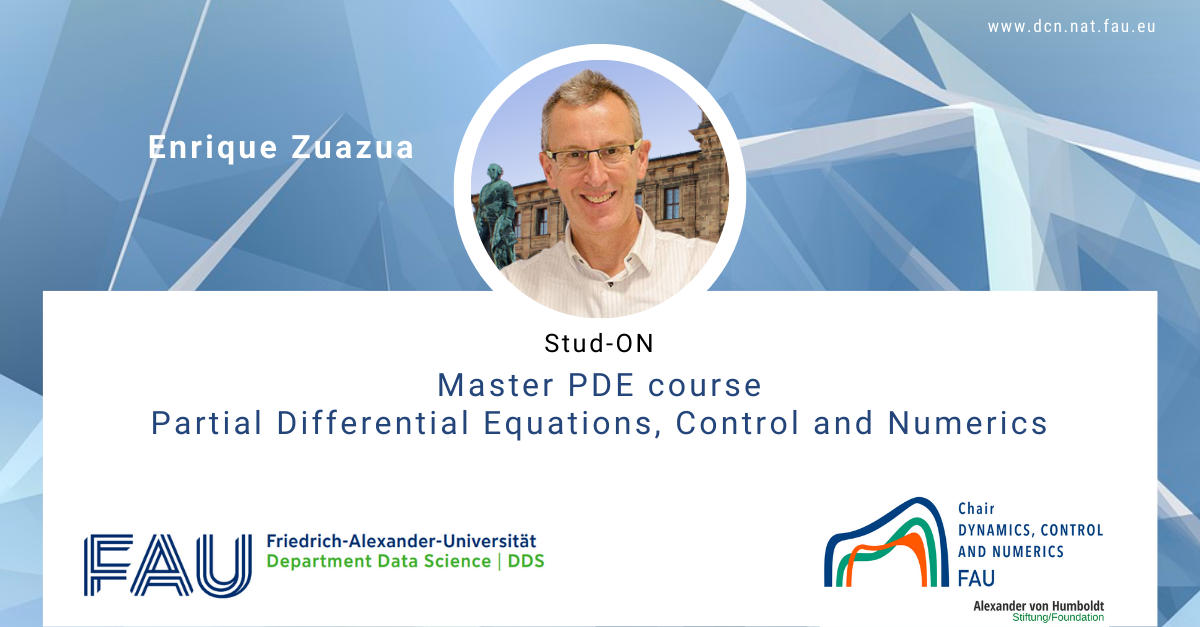
Master PDE course Partial Differential Equations, Control and Numerics

Partial Differential Equations A First Course

Professional Diploma in Education Programme College of Education

Courses Corona College of Education

From Basics to Partial Differential Equation (PDE) Course Overview
Learn How To Apply Separation Of Variables Method To Solve.
The Prerequisites For The Pde Class At The University Of Chicago Are A Full Sequence On Real Analysis, Following Rudin’s Principles Of Real Analysis [7] Or An Equivalent Textbook, Classes On.
Mooc Stands For A Massive Open Online Course.
Basic Properties Of Elliptic Equations, Wave.
Related Post: